
Engaging clinicians in PFAS: 2026 National PFAS Conference
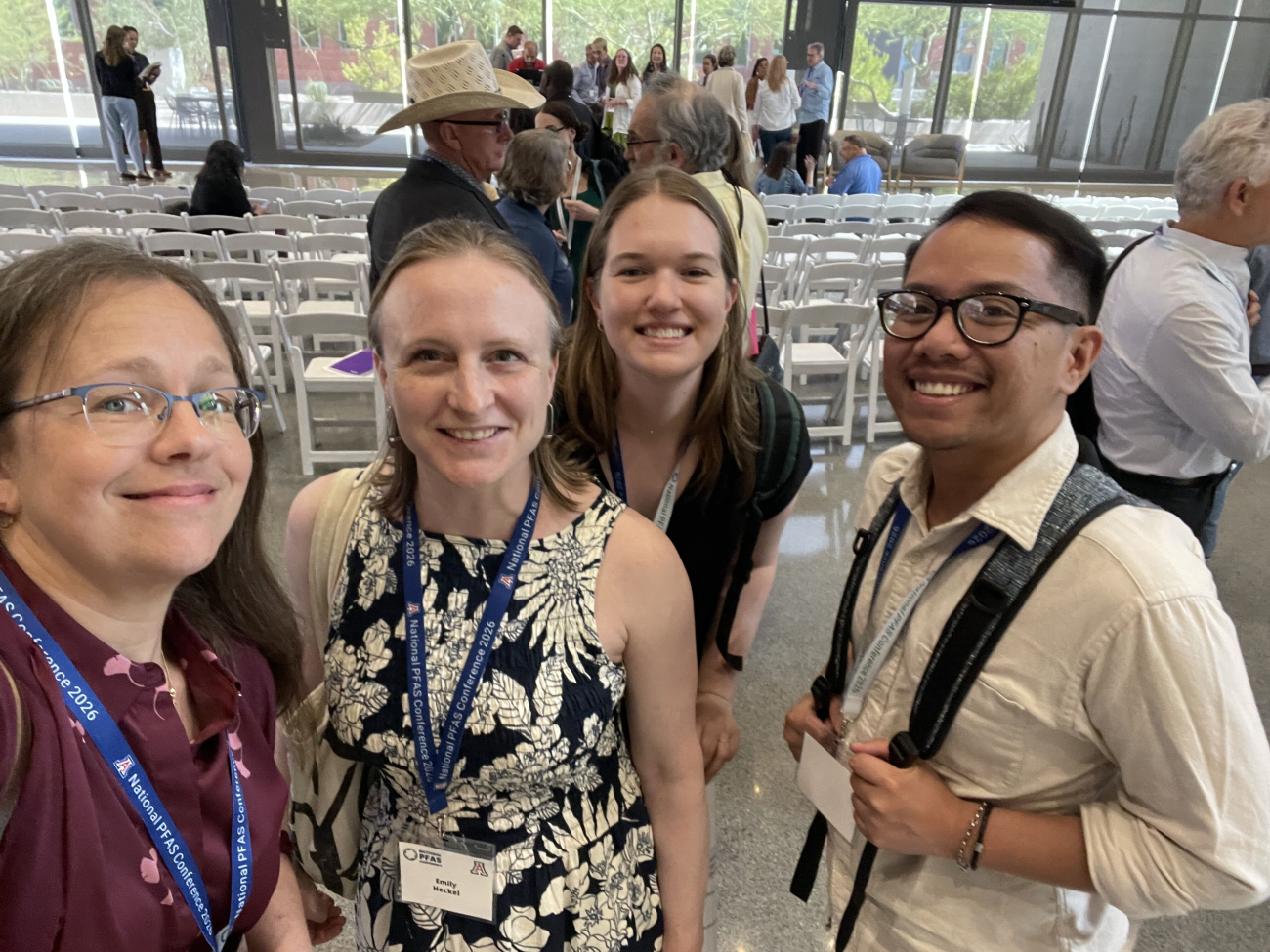 Scientists from Silent Spring Institute joined researchers, community members, policymakers, state officials, and advocates at the 2026 National PFAS Conference, held June 8–10 at the University of Arizona. The biennial event is a national forum for sharing the latest science, policy developments, and strategies for supporting impacted communities and strengthening health and environmental protections.
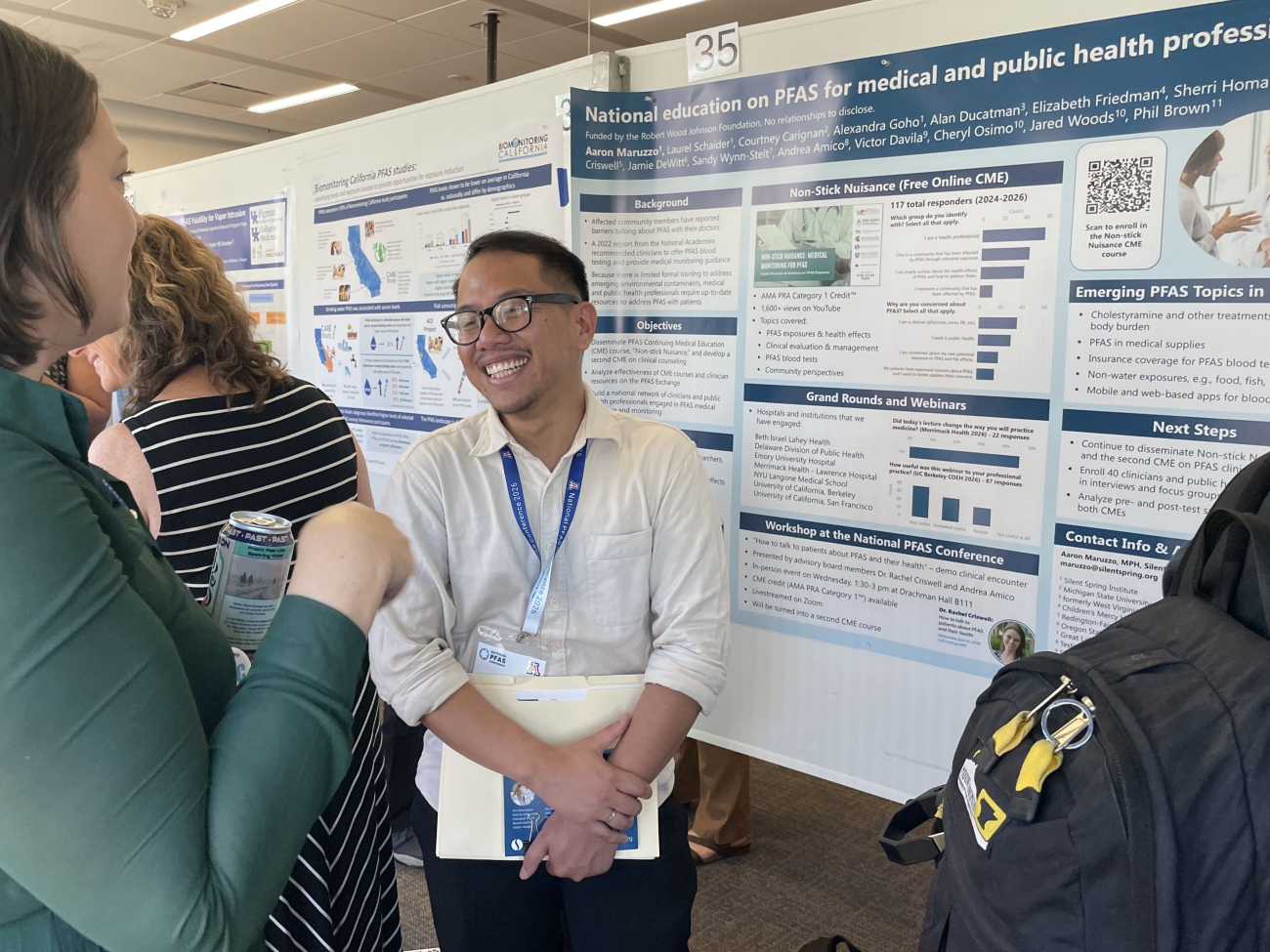
This year, Silent Spring’s Aaron Maruzzo shared updates on a project helping clinicians better understand PFAS and care for patients with elevated exposures. “Many people are told to discuss their exposure concerns with their doctors,” says Maruzzo. “But clinicians often lack the training and resources needed to guide those conversations.”
In 2022, the National Academies of Sciences, Engineering, and Medicine recommended that healthcare providers offer PFAS blood testing and medical monitoring for patients with elevated exposure. To help clinicians put those recommendations into practice, the project team developed a free online continuing medical education (CME) course, called Non-Stick Nuisance. The course has already received more than 1,600 views.
The team is now working to expand the course’s reach and build a national network of clinicians and public health professionals engaged in PFAS education and medical monitoring.
At the conference, project partner Dr. Rachel Criswell of Redington-Fairview General Hospital in Maine led a workshop for clinicians on conducting PFAS-related patient assessments. The training covered topics such as ordering PFAS blood tests, interpreting the results, discussing health implications, and helping patients reduce their exposures. A board-certified family medicine physician, Criswell has first-hand experience caring for highly exposed farming communities in Maine and shared practical approaches primary care providers can use in their own practices.
The clinician engagement project is funded by the Robert Wood Johnson Foundation and is a collaboration among Northeastern University, Michigan State University, Silent Spring Institute, clinicians, and community partners. Maruzzo says the initiative builds momentum for a nationwide movement to equip clinicians with the knowledge and confidence to address PFAS-related health concerns.
Silent Spring scientists also presented findings from several other PFAS studies. Emily Heckel shared research examining how residential history, home water filtration, and bottled water use contribute to differences in PFAS blood levels in two Massachusetts communities. Dr. Alina McIntyre discussed findings from the PFAS HOME Study, which explores how housing characteristics can influence levels of PFAS in indoor air and dust.
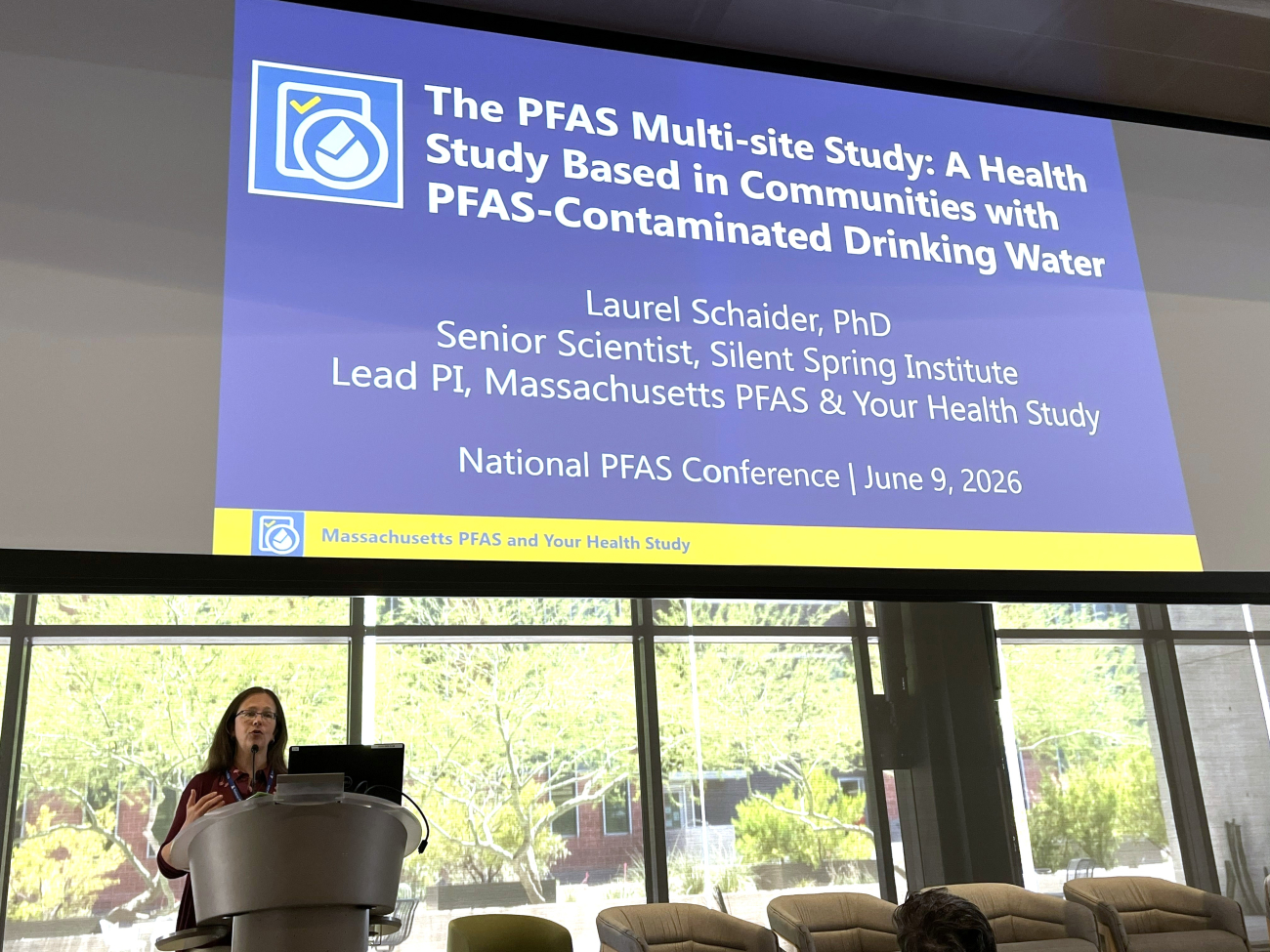
Dr. Laurel Schaider delivered a keynote address on the PFAS Multi-site Study, a major study on health impacts associated with PFAS-contaminated drinking water, and her team’s approaches to reconstructing past exposures. Schaider also led a workshop featuring community members who shared their experiences participating in environmental health research.
“The National PFAS Conference is a unique conference centered on the needs and perspectives of impacted communities,” said Schaider. “As a researcher, hearing the experiences and perspectives of community members is a vivid reminder of why our work is so important.”
 The conference celebrated the contributions of long-time PFAS researcher and Silent Spring collaborator Dr. Phil Brown of Northeastern University, who received the 2026 Lifetime Achievement Award. Under Brown’s leadership, the first National PFAS Conference was held at Northeastern University in 2017.
This year’s meeting carried a heightened sense of urgency. As federal environmental protections face increasing uncertainty, including efforts to roll back drinking water standards for PFAS, participants emphasized the importance of collaboration across states, communities, and public sectors.
In the absence of federal leadership, a growing number of PFAS policies are advancing at the state level. The conference provided an opportunity for attendees from different states to exchange ideas, share resources, and learn from successful approaches for reducing exposure and protecting public health.
Learn more about Silent Spring’s PFAS research and resources: