Staff

Julia G. Brody, PhD, Executive Director Gwen Dwyer, Administrative Assistant
Kathleen Attfield, Staff Scientist Cheryl Osimo, Cape Cod Coordinator
Anne Bonner, Director of Development and Community Affairs Laura Perovich, Research Assistant
Anna Claeys, HR / IT / Research Associate Ruthann Rudel, MS, Director of Research
Diane Czwakiel, Administrative Manager Laurel Schaider, PhD, Staff Scientist
Robin E. Dodson, ScD, Postdoctoral Research Fellow Erica Truncale, Development Assistant
Sarah Dunagan, MA, Research Assistant  
 

Julia G. Brody, PhD, Executive Director
Dr. Julia Brody, executive director of Silent Spring Institute, is a leader in research on breast cancer and the environment and in community-based research and public engagement in science. Brody’s current research focuses on connecting breast cancer advocacy and environmental justice in a study of household exposures to endocrine disruptors and air pollutants through a collaboration of Silent Spring Institute, Communities for a Better Environment (a California-based environmental justice organization), and researchers at Brown University and the University of California, Berkeley. Since 1996, Brody has been the principal investigator of the Cape Cod Breast Cancer and Environment Study, a case-control study of 2,100 women that includes testing for 89 endocrine disruptors in homes and historical exposure mapping. The study was the first to measure estrogenic activity in groundwater and drinking water. Results have been published in Environmental Health Perspectives and elsewhere.

Dr. Brody led the publication of “Environmental Factors and Breast Cancer,” a supplement in Cancer, a journal of the American Cancer Society, which reports on a two-year scientific review of evidence on animal mammary gland carcinogens and epidemiologic studies of breast cancer and environmental pollutants, diet, body size, and physical activity.

Brody’s research is supported by the National Science Foundation, the National Institutes of Health, Susan G. Komen for the Cure, and the Avon Foundation, among others. Her research collaborators include investigators at Harvard, Brown, and Boston universities, the University of California, Berkeley, and elsewhere. The U.S. Environmental Protection Agency recognized her research with an Environmental Merit Award in 2000, and she has been honored by the Heroes Tribute of the Breast Cancer Fund. She presented one of the Distinguished Lectures at the National Cancer Institute in 2002. She serves as an advisor to the California Breast Cancer Research Program, the Breast Cancer and the Environment Research Centers of the National Institute of Environmental Health Sciences, and breast cancer activist organizations.

Dr. Brody is an adjunct assistant professor at the Brown University School of Medicine. She earned her PhD at the University of Texas at Austin and her AB at Harvard University.

Kathleen Attfield, Staff Scientist
Kathleen Attfield is a staff scientist with experience in toxicology, biochemistry, urban ecology, and geographic information systems. For Silent Spring Institute’s extensive review of environmental factors and breast cancer that appeared in the journal Cancer, she reviewed toxicological literature and developed the online database of animal mammary gland carcinogens. Attfield directs the ongoing development of the Massachusetts Health and Environment Information System, or MassHEIS, a web tool that allows users to explore data about their communities and the relationships between pollution and health outcomes. She manages the Institute’s geographic information database and provides research support to an ongoing study of groundwater and surface water contamination from septic systems.

Before joining Silent Spring Institute, Attfield gained experience in developing community methods for restoring urban natural resources, and she conducted molecular biology laboratory research. Attfield earned her BSc with honors in biochemistry from Brown University and has taken graduate coursework at Harvard University Extension School and Tufts University in toxicology, epidemiology, statistics, and sustainability.

Anne Bonner, Director of Development and Community Affairs
Anne Bonner has responsibility for managing Silent Spring Institute’s annual fund systems and donor relations. Bonner also manages community relations and is the liaison with the Friends of Silent Spring Institute.

Before joining the Institute, Bonner served for 16 years at the Greater Boston Chamber of Commerce. As vice president for programs, she tripled program revenues and created a variety of successful programs, including a multi-track Women’s Network.

Bonner served previously as the assistant to the president at Hahnemann University in Philadelphia. She earned her bachelor’s degree at West Chester University in Pennsylvania and received a Certificate of Special Studies in Management at Harvard University.

Anna Claeys, HR / IT / Research Associate
Since joining Silent Spring Institute in 2000, Anna has supported its administrative and scientific staff. In her latest incarnation she manages the Institute's website and serves as the office’s information technology coordinator.

Claeys joined Silent Spring Institute because of her belief in the link between environmental pollutants and human health and her hope that knowledge about this link will lead to a cleaner environment. Anna graduated magna cum laude from Humboldt Sate University with a BA in religious studies. She also earned a BFA in ceramics from MassArt where she graduated with distinction and departmental honors.

Diane Czwakiel, Administrative Manager
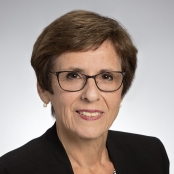
Diane Czwakiel joined Silent Spring Institute as the administrative manager in 1998. Czwakiel oversees the financial management of the Institute. She manages human resources and oversees facilities.

Czwakiel graduated from Adelphi University with a BA in accounting, worked at Arthur Anderson CPAs for five years, and earned her Certified Public Accounting certification. After a variety of positions in New York, Diane moved to Massachusetts in 1994.

Robin E. Dodson, ScD, Postdoctoral Research Fellow
Robin Dodson is a postdoctoral research fellow with expertise in exposure assessment and indoor air pollution. She is currently working on developing innovative exposure assessment methods for cohort studies and intervention studies aimed at reducing indoor pollution.

Dr. Dodson recently completed her doctorate in environmental health at the Harvard School of Public Health. Working with Drs. Deborah Bennett, Jonathan Levy, James Shine, and Jack Spengler, she designed and conducted an exposure study in the Boston area focusing on residential and personal exposures to volatile organic compounds, such as chloroform from heated tap water, benzene from attached garages, and formaldehyde from home furnishings. She developed a model to evaluate the potential impacts of chemicals on residential exposure in secondary areas, such as basements, attached garages, and apartment hallways. She developed a personal exposure model based on time-weighted microenvironmental concentrations to determine how people are exposed to volatile organic compounds. In addition, she evaluated methods for leveraging existing residential concentration data to model residential concentrations for potential study populations. As a graduate student, she also contributed to two studies focusing on asthma in lower-socioeconomic-status urban residences in the Boston area.

Prior to her graduate work, Dr. Dodson worked at Menzie-Cura and Associates, where she contributed to both human and ecological risk assessments and the development of environmental health educational materials under a grant from the National Institutes of Health. In addition to her doctorate, Dr. Dodson holds a bachelor’s in environmental studies from Bates College, where she was inducted into the Phi Beta Kappa Academic Honor Society, and a master’s in environmental science and risk management from the Harvard School of Public Health.

Sarah Dunagan, MA, Research Assistant
Sarah Dunagan graduated Phi Beta Kappa from Wesleyan University with bachelor’s and master’s degrees in earth and environmental science. Her experience includes research using remote sensing and biogeochemistry to assess mercury contamination in Connecticut, geographic information system internships with the U.S. Forest Service and Nature Conservancy, and work with a community health organization.

Gwen Dwyer, Administrative Assistant
Before joining Silent Spring Institute in 2005, Gwen Dwyer served as staff for several charitable foundations at Grants Management Associates, a philanthropic consulting firm in Boston, Massachusetts. Dwyer has had additional prior experience in the areas of magazine publishing and women’s health, as well as in providing services for women facing domestic violence. Her volunteer activities include helping immigrants to learn English and preparing and serving meals for homeless women. Dwyer holds a bachelor’s in international relations from Pomona College.

Cheryl Osimo, Cape Cod Coordinator
As Cape coordinator, Cheryl Osimo organizes Silent Spring Institute’s education and outreach efforts, including conducting information sessions for Cape residents and organizations, convening public advisory committee meetings and other public forums, serving as liaison to media and local officials, and organizing programs and activities that support the Institute’s research agenda.

Osimo is an active member of several community-based health advocacy organizations, including the Massachusetts Breast Cancer Coalition, for which she serves as the coordinator of events and community outreach, and the Breast Cancer Advisory Committee for the Massachusetts Department of Public Health.

Osimo’s community outreach to Cape residents has been honored by a number of civic and community groups and institutions, including Boston University, the Massachusetts Federation of Business and Professional Women, the National Women’s Health Network, and the State Senate of the Commonwealth of Massachusetts. She has received the Arthur H. Wilde Award for Distinguished Service to Community, an Official Citation in Recognition for being named Woman of the Year and for Commitment to Women’s Health, and the Community Service Award–Local Community. In 2009 she was appointed to a two-year term on the Massachusetts Commission on the Status of Women, an independent state agency to advance women's equality statewide. In addition, Osimo was selected to participate as a presenter and mentor for first-time advocate reviewers participating in the Department of Defense Breast Cancer Research Program. She earned her bachelor’s degree in elementary education at Boston University.

Laura Perovich, Research Assistant
Laura Perovich graduated magna cum laude from Bowdoin College with a bachelor’s degree in mathematics and religion. She earned honors in applied mathematics for her thesis on modeling gymnastics skills using Newtonian mechanics. She also completed a senior independent study considering the role of religion in political philosophy. While in college, Perovich worked as a research assistant at the Cold Regions Research and Engineering Laboratory, where she was involved in assessing the environmental impact of explosive residue on military training grounds.

After graduating from college, Perovich spent almost two years teaching secondary school mathematics as a Peace Corps volunteer in Guinea, West Africa. Although teaching was her primary responsibility there, she also led community projects on topics such as environmental education, gender equality, and HIV/AIDS.

Ruthann Rudel, MS, Director of Research
Ruthann Rudel is a leader in studies of environmental pollutants and women’s health. Since 1995 she has maintained a special focus on toxicology, risk assessment, and exposure assessment, including a particular focus on endocrine disrupting compounds, chemicals that affect hormones. In her role as the senior scientist of environmental toxicology at Silent Spring Institute, she directed a major review of animal mammary gland carcinogens—published in 2007 in Cancer—that compiled existing research on these carcinogens, reviewed key issues in study design and animal models, and synthesized information on exposure opportunities.

Rudel directs the Institute’s Household Exposure Study, which Environmental Science & Technology has described as the “most comprehensive analysis to date” of exposures in homes. She also leads the exposure assessment for the Cape Cod Breast Cancer and Environment Study, working since 1998 with co-investigators at Harvard University, Brown University, Tufts University, and the U.S. Centers for Disease Control and Prevention. As part of the Cape Cod Study, Rudel led the first research team to measure estrogenic activity in groundwater contaminated by septic systems. She has published more than 20 journal articles and book chapters on endocrine disruptors, regulatory toxicology, indoor air exposures, and related subjects. She holds an adjunct appointment as a research associate in the Brown University Department of Pathology and Laboratory Medicine.

To support Silent Spring Institute’s goal of providing scientific support for women’s health advocacy, Rudel is active in the area of regulatory toxicology and has participated in numerous environmental regulatory reviews for the U.S. Environmental Protection Agency, Health Canada, Toxicology Excellence for Risk Assessment, and others. She co-chaired the symposium Breast Cancer: Issues in Screening and Testing of Potential Human Carcinogens at the 2001 Society of Toxicology, has been active in the Regulatory Affairs and Legislative Assistance Committee of the Society of Toxicology, and serves as an ad hoc manuscript reviewer for such journals as Environmental Research and Environmental Science & Technology. Rudel earned her BA in chemistry and neuroscience from Oberlin College, and an MS in environmental management and policy from Tufts University.

Laurel Schaider, PhD, Staff Scientist
Laurel Schaider is a staff scientist with expertise in environmental contaminant fate and transport. She is responsible for Silent Spring Institute’s Cape Cod groundwater and drinking water research. Prior to joining Silent Spring, she worked as a research associate at the Harvard School of Public Health in the Center for Children’s Environmental Health project at the Tar Creek Superfund Site in Oklahoma, an abandoned mining area heavily contaminated by mixtures of metals near a community with many residents of Native American descent. As part of this research, she investigated sources of heavy metals into Tar Creek and subsequent fate and transport of these metals. She also studied concentrations and chemical forms of metals in mine waste material that is stored in large piles throughout the site, focusing on size fractions most relevant for transport and exposure. She worked with several Native American tribes to measure metal accumulation in plants associated with subsistence practices. In addition, Dr. Schaider participated in a study of mercury biogeochemical cycling in the Gulf of Mexico off the coast of Louisiana.

Dr. Schaider earned her Ph.D. in Environmental Engineering at the University of California, Berkeley, where she studied with David Sedlak, and an S.B. in Environmental Engineering Science from MIT. She has taught ecology and environmental engineering courses at MIT and Northeastern University.

Erica Truncale, Development Assistant
As Silent Spring Institute’s development assistant, Erica Truncale is responsible for the management of donor transactions, financial reports, correspondence, and mailings. She also assists the director of development with volunteer committee meetings, event planning and logistics, and a variety of other initiatives.

Truncale earned a bachelor’s degree in English from the State University of New York at Geneseo. There she was involved in several volunteer organizations, including leadership of Geneseo First Response, the campus emergency medical service. She also participated in Hurricane Katrina relief work in Gulfport/Biloxi, Mississippi, and co-founded an organization to support a local equine sanctuary.

return to top of page